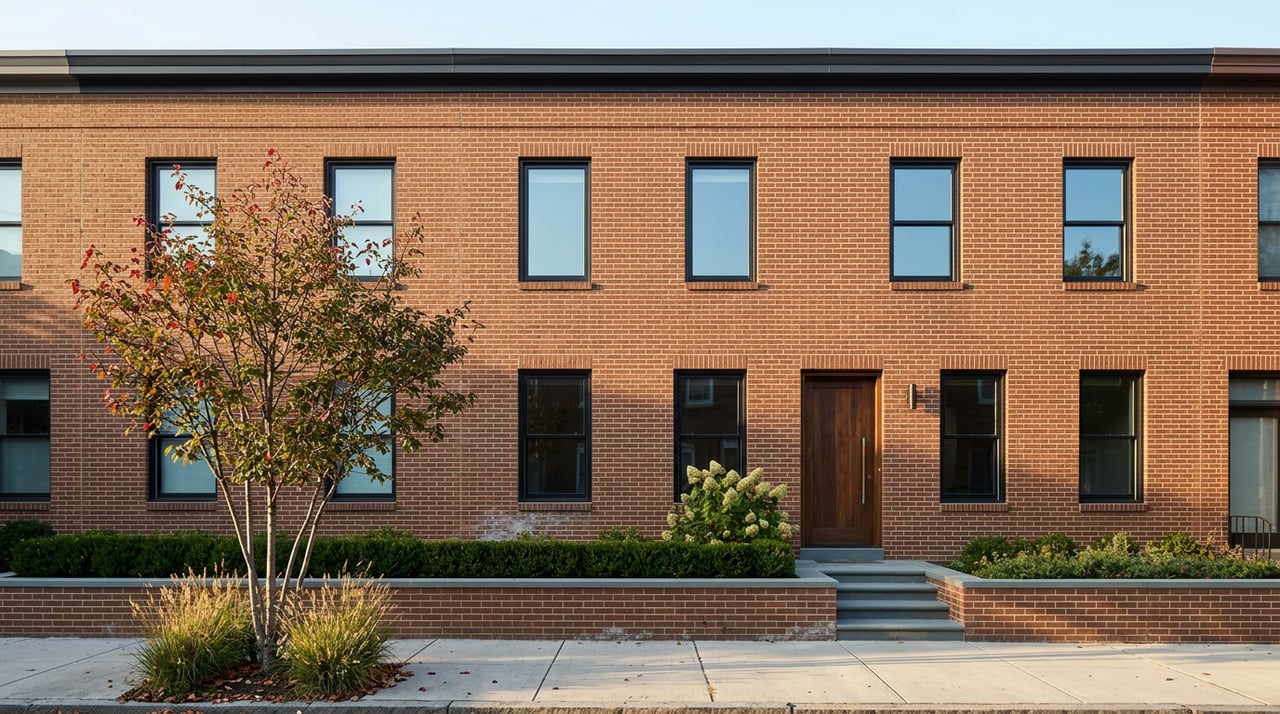
The Company Called Fishtown Pickle Project Just Bought a Building in Norris Square
September 24, 2026
September 24, 2026
The Philadelphia Inquirer reported that in 2018, Niki Toscani and Mike Sicinski made a batch of pickles as wedding favors. Toscani was a dietitian. Sicinski was a chef working as a food-service director for a New Jersey school district. They lived in Fishtown at the time, and their first wholesale customers were neighborhood retailers: Bottle Bar East, IGA, Riverwards. When Sicinski lost his job at the start of the pandemic, the wedding favor project became Fishtown Pickle Project, a name that stuck even after production moved to Bridesburg Commissary and then to Globe Dye Works in Frankford.
Last month, the company bought a 6,200-square-foot building at 1911-13 N. Second Street. That's in Norris Square, not Fishtown, a different neighborhood than the one whose name is stamped on every jar. The $2 million project will triple the company's pickle production and add a 500-square-foot tasting room, something Toscani calls a brinery, where customers can watch cucumbers become product and buy pickles by the pound instead of only by the jar. It's set to open in the summer of 2027.
Toscani said the search for a bigger home took years, and that Fishtown itself was never really in the running. Finding manufacturing and retail space with a driveway and loading area in the neighborhood proved difficult, she told The Philadelphia Inquirer, "especially for a bootstrapped small business." Sicinski told The Philadelphia Inquirer: when you're getting trailers full of glass jars delivered, you need a garage and a street that isn't already jammed with traffic.
That single fact says more about where Fishtown is heading than any restaurant opening this fall.
Frankford Avenue has no shortage of activity right now. What it doesn't have, apparently, is room for a business that needs to make something in bulk and sell it on-site. Fishtown Pickle Project needed a building large enough to triple output, with loading access for delivery trucks and enough surrounding street capacity to not create a bottleneck every time a trailer showed up. That combination doesn't exist much on a corridor increasingly built out for ground-floor retail beneath new residential construction.
Norris Square offered the couple what Fishtown couldn't: a large existing building, a driveway, and a street that can handle deliveries. The move isn't a rejection of the neighborhood that gave the company its name. It's a straightforward result of what kind of real estate is actually available a few blocks in either direction. Frankford Avenue has plenty of ground-floor storefronts sized for a host stand and a bar. It doesn't have many buildings sized for a production line.
While the pickle company was buying a building it could grow into, the storefronts still available on Frankford Avenue kept filling with concepts that need exactly the kind of space Fishtown does have: a single room, a bar, and a story.
Philly Curio, 2240 Frankford Ave. Troy Timpel, the tattoo artist and collector who founded Villain Arts and now runs roughly 30 tattoo shows around the country, is opening what he calls a museum bar on the ground floor of a new building near the Fishtown-Kensington line. The room will hold his own collection of skulls, taxidermy, and tribal masks, some displayed under glass built into the tables. The menu leans Cajun and Creole, drawing on Savannah's Alligator Soul, with small plates built around proteins like rattlesnake. It seats 15 at the bar and can host 10 to 20 more in a private dining room. Timpel told Whatnow that the concept was "kind of like a museum bar."
Top Dog Cocktails, 2012 Frankford Ave. Ken Smuckler's cocktail company is opening a vinyl listening room modeled on Japanese jazz kissas, the small, record-focused bars built around sound and quiet. The Fishtown flagship measures 350 square feet, arguably the smallest bar in the neighborhood, with a 15-seat bar and a two-turntable DJ station. A sister location in Kennett Square, partnered with the music venue Kennett Flash, is more than double the size at 750 square feet.
Adda, 1700 Frankford Ave. New York's Unapologetic Foods, the group behind Dhamaka and Semma, is bringing its original Adda concept to a storefront across from the 19125 post office. The restaurant focuses on regional Indian cooking that goes beyond familiar Indian-American menus. It was originally expected in fall 2025.
Each of these fits inside a single storefront. None of them needs a loading dock.
Adda's timeline is worth sitting with. A restaurant originally slated for fall 2025 is now targeting October 2026, a full year past its original date. It isn't the only project running late this season. Of the three holdovers from last year's citywide fall preview, Adda in Fishtown, Ayat near Rittenhouse Square, and Brunch Bulls in Point Breeze, all three are still not open, even as every restaurant from last year's list that did open has stayed open.
That's a useful data point for anyone who assumes a for-lease sign or a permit posted in a window means a business will be serving food within a few months. Even a straightforward restaurant buildout, in a market with plenty of contractors and a well-known restaurant group behind it, can run a year behind schedule. Frankford Avenue's popularity hasn't made it faster to open something here. If anything, the backlog of interested tenants and the pace of new residential construction around them seems to be stretching timelines out.
Philly Curio has moved through a similar drift. Early reporting in February pointed to a March opening. By September, the target had shifted to October in some outlets and November in others, a difference that likely just reflects where each report caught the project mid-buildout rather than any real change in plans. Either way, a concept first described to reporters as a March debut is now aiming for late fall at the earliest.
Put these threads together and a pattern shows up that a quick scroll through a restaurant roundup won't surface. Frankford Avenue keeps adding bars and restaurants that fit into a single retail bay: a museum bar with 15 seats, a 350-square-foot listening room, a regional Indian kitchen taking over a storefront across from the post office. These are concepts built for foot traffic and a story, and the corridor has plenty of room for them, even if the room takes longer to finish than planned.
What the corridor increasingly can't support is a business that needs to make something at scale and sell it where it's made. Fishtown Pickle Project spent years looking for that combination inside the neighborhood whose name they carry and came up empty, landing instead in Norris Square, where a 6,200-square-foot building with a driveway was actually available. It's not a story about a business leaving Fishtown behind. It's a story about what Fishtown's real estate has quietly stopped offering.
For anyone who lives along Frankford Avenue, that's the more useful thing to know heading into fall. Expect more small, specific concepts to keep landing in the storefronts you already pass every day, and expect the next production-scale business, whether it's a brewery, a bakery with a commissary kitchen, or the next Fishtown Pickle Project, to open its doors a few blocks over the line instead.
If you're curious about how these shifts in Fishtown's commercial character show up in the housing market around Frankford Avenue, from what a storefront-adjacent block commands to how proximity to a corridor like this one factors into pricing, the team at Keller Williams Main Line works this market block by block and is always glad to talk through what's changing and why.
Stay up to date on the latest real estate trends.


Our team’s unprecedented professionalism, skill, and attention to detail has allowed us to set sales records for the past 30 years. We will ensure your buying or selling experience exceeds your expectations.
CONTACT DETIALS
ADDRESS 6 Coulter Ave Ardmore, PA 19003 US